Enerhauggata 96
The SonEnerhauggata 96 is a small, white-painted wooden house that conceals suspected imprisonment beneath an ordinary residential exterior. Simon’s late-night response to an anonymous message makes the address a focal point in the search for Nestor’s captives, while the empty basement exposes the limits of a raid arriving after its intended discovery has been anticipated or evaded.
The Address and Its Setting
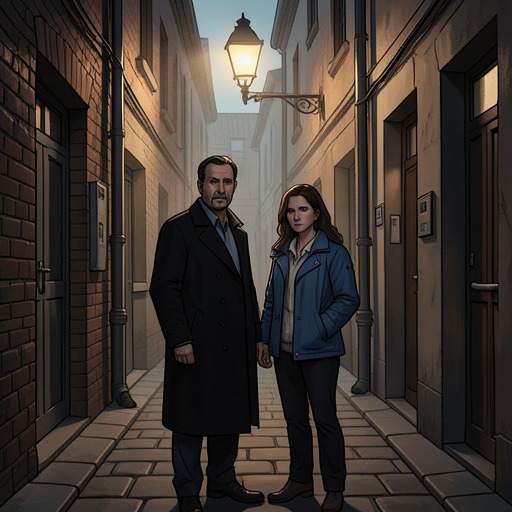
Simon and Kari wait across the street, about fifty metres from number 96. The two-storey house stands amid the redevelopment of Enerhaugen: unlike the picturesque buildings demolished in 1960 to make way for four tower blocks, it had been spared. In the summer night it appears quiet and peaceful, a domestic setting difficult to reconcile with the possibility that people are imprisoned inside.
That contrast gives the location its narrative force. The house’s appearance offers no visible confirmation of what may be happening within it; the threat is concealed behind an unremarkable façade rather than announced by an openly criminal setting.
The Message and the Raid
Simon receives a text from an unknown sender directing him to find Nestor’s prisoners at Enerhauggata 96 and to hurry. The message is signed “The Son.” Acting on it, Simon calls for Delta to raid the address, pressing for a rapid response despite the late hour. Kari accompanies him to the scene, where they wait for the team while looking at the house from across the street.
The message turns the house into an urgent lead in the effort to locate people held by Nestor’s network. It also connects the operation to Sonny, who communicates with Simon without revealing himself openly. The address is therefore both a physical destination and a point of contact between the fugitive’s information and the police investigation.
The Basement and the Missing Prisoners
Inside the house, Simon identifies the basement as the place to investigate. A man leads the way down and unlocks a door secured with two locks. The smell Simon recognizes confirms his suspicion that people have been kept there, and that there may have been many of them. Yet the basement is empty when the search reaches it.
The discovery confirms the suspected use of the premises without producing the people the police came to rescue. Its locked entrance and empty rooms leave a consequential gap between evidence of confinement and the recovery of captives. The raid establishes the house as part of the trafficking operation’s geography, but the prisoners’ absence prevents the address from becoming a completed rescue scene.
Narrative Significance
Enerhauggata 96 brings together two opposed forms of visibility: the house is easily seen from the street, but the confinement Simon suspects is hidden below ground. Its ordinary appearance helps make the alleged crime difficult to detect, while the double-locked basement provides a concrete sign that the domestic surface cannot be taken as proof of safety.
The episode also shows how the investigation depends on information passed through compromised and clandestine channels. Simon acts on a message from an unknown sender, and the operation reaches a site associated with Nestor’s prisoners only to find it empty. The address thus marks both a breakthrough in locating the network’s hidden spaces and a failure to find those it has concealed.